


We have become increasingly dependent on data, analytics, and organizational protection policies. Data virtue is about leveraging data securely and ethically, and this topic has become more critical when dealing with regulations like the General Data Protection Regulation (GDPR), the right to be forgotten, and related regulations.
Data governance, which seeks to establish an oversight framework that manages the creation, acquisition, integrity, security, compliance, and quality of data, is essential for any organization that makes decisions about data.
What data-dependent operations must understand is that data governance affects the entire organization, not just data. However, the old model for data governance was slow and clumsy.
Adaptive data governance encourages faster decision making and a more collaborative approach to governance. Being agile data governors allows for more flexible decision making. Taking such governance even further, automating data governance itself could simplify execution across an entire organization.
Having a truly adaptive data governing approach would be great for compliance, quality, impact tracking, cross-referencing and offers independence to data users.
Adaptive data governance encourages a malleable approach that allows an organization to employ multiple data governance strategies depending on changing business situations. The other aspect of adaptive data governance is moving away from manual (and often slow) data governance and toward aggressive automation.
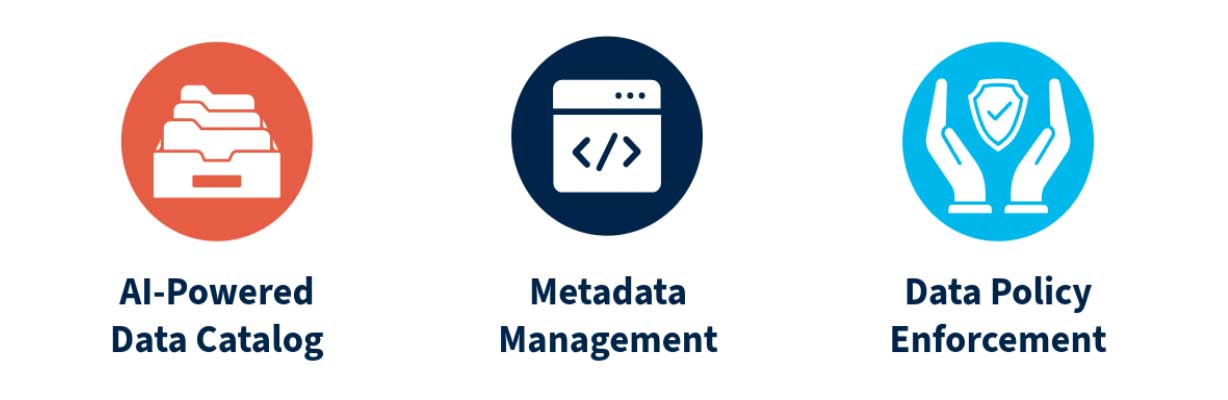
Tools are not the ultimate answer to implementing data governance. You will still need to personally secure stakeholders’ buy-in and encourage consistent engagement in the data process. Data governance automation should be about simplifying the execution of roles and responsibilities, not necessarily streamlining engagement itself.
We believe in listening to our clients and facilitating robust dialogue to learn the full picture of the project from multiple perspectives. We craft solutions that are tailored to our client’s needs, emphasizing a robust process that engages the correct stakeholders throughout the project so that once it’s complete, our clients can continue to manage it successfully.
Looking for more exclusive insights and articles? Sign-up for our newsletter to recieve updates and resources curated just for you.