

The rapid evolution of cyber threats, driven by increasingly sophisticated tactics and automation, has exposed the vulnerabilities of traditional security solutions. As organizations grapple with these escalating challenges, an initiative-taking, AI-driven cybersecurity approach is crucial to preempt and mitigate these growing threats.
By focusing on the strategic value of AI and carefully assessing its role in decision-making processes, organizations can build a roadmap that not only enhances security but also prepares them for the future of autonomous defenses.
There is a growing need for security leaders to take control of AI integration in their cybersecurity strategies, and to move beyond vendor-driven solutions to develop tailored approaches that align with their specific risk profiles and organizational goals.
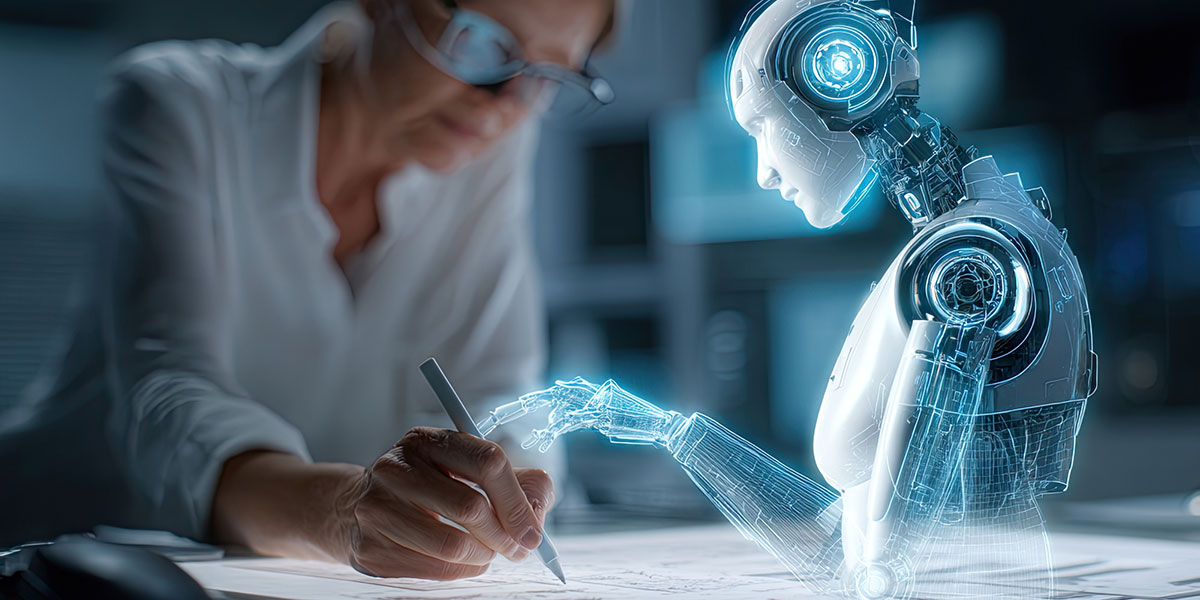
AI offers significant advantages in cybersecurity but cannot fully replace human intelligence. Collaboration between AI and human analysts is essential for effective cybersecurity. AI does, however, excel in processing large volumes of data and identifying patterns that would be impossible for humans to detect. It can analyze network traffic, user behavior, and other data sources to identify potential threats quickly and accurately. This capability is particularly valuable for detecting sophisticated attacks that leverage multiple vectors and techniques (Sekioa.io, 2025).
Humans bring contextual understanding, creativity, and intuition to threat analysis and response, and human judgment is particularly important in complex scenarios where AI may not have sufficient data or context to make accurate decisions.
To achieve a fully autonomous security posture, organizations could consider the broader implications of AI integration, including its impact on human resources, decision-making frameworks, and overall security culture. A balanced approach, where AI’s capabilities with human oversight to ensure that AI acts as a force multiplier rather than as a replacement for human expertise, should help organizations create a resilient security environment where AI augments human capabilities to tackle complex and evolving cyber threats.
Our partner, Info-Tech (2025) has identified key strategic priorities that are essential for successfully integrating AI into an organization’s cybersecurity framework. These IT priorities include:
This integration is not without its risks, however. Ethical considerations in cybersecurity decision-making loom large. Questions surrounding data privacy, algorithmic bias, and the potential misuse of AI necessitate careful deliberation (Academia, 2023). Striking the right balance between human judgment and AI automation is a pivotal challenge that requires ongoing attention.
AI’s role in cybersecurity has expanded to serve as a powerful tool for augmenting human-led analysis and decision making (Forvis Mazars, 2025). This capability can enhance early threat detection and accelerate incident response.
But, to achieve a fully autonomous security posture, organizations should consider the broader implications of AI integration, including its impact on human resources, decision-making frameworks, and overall security culture.
The importance of balancing AI’s capabilities with human oversight to ensure that AI acts as a force multiplier rather than as a replacement for human expertise cannot be overstated. This balanced approach will help organizations create a resilient security environment where AI augments human capabilities to tackle complex and evolving cyber threats.
Don’t let automation outpace your organization’s ability to respond. Connect with ROCIMG to explore how AI-human collaboration can transform your security posture from reactive to resilient. Our team will help you define the right balance between AI precision and human oversight.
We believe in listening to our clients and facilitating robust dialogue to learn the full picture of the project from multiple perspectives. We craft solutions that are tailored to our client’s needs, emphasizing a robust process that engages the correct stakeholders throughout the project so that once it’s complete, our clients can continue to manage it successfully.
Looking for more exclusive insights and articles? Sign-up for our newsletter to recieve updates and resources curated just for you.